 All about product
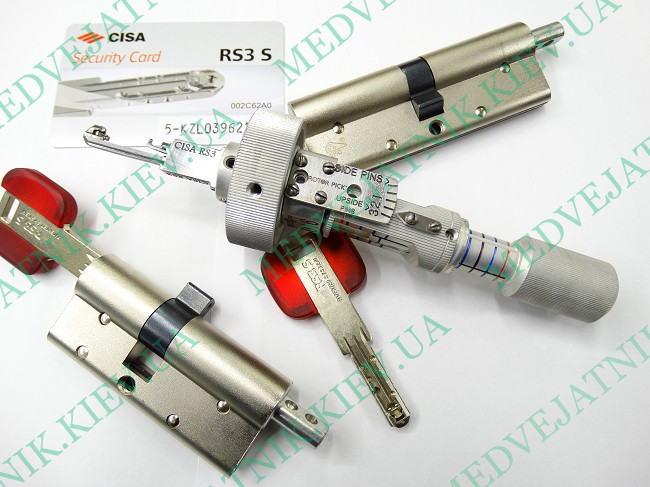
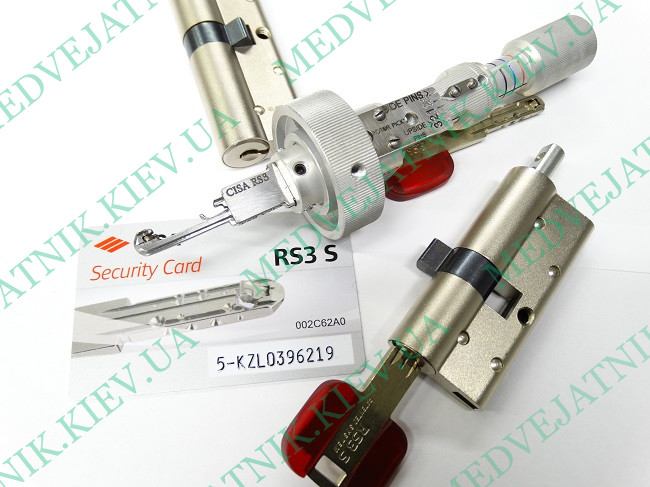
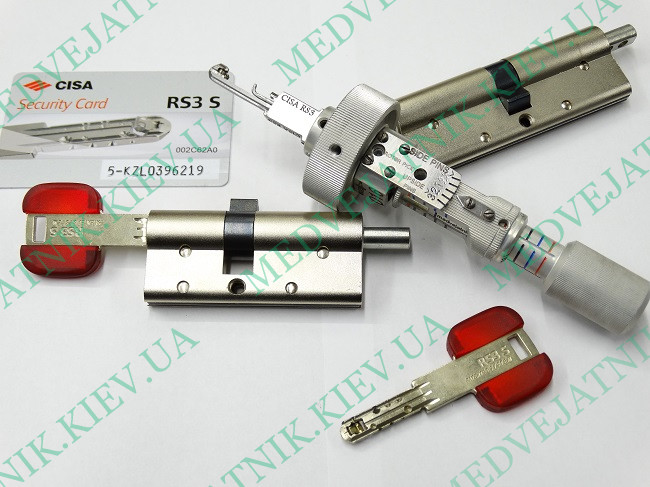
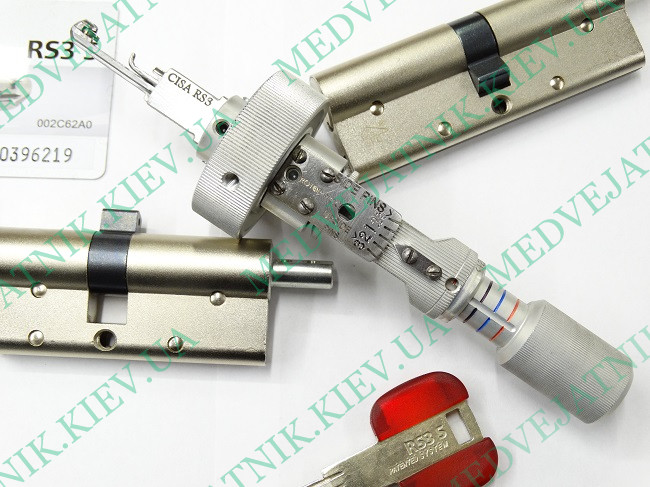
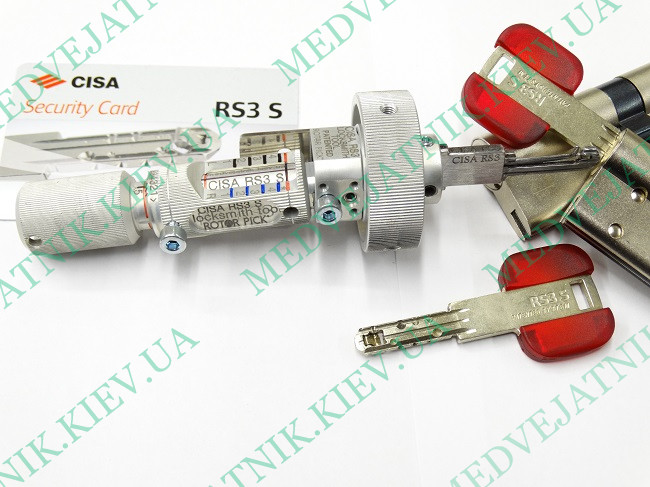
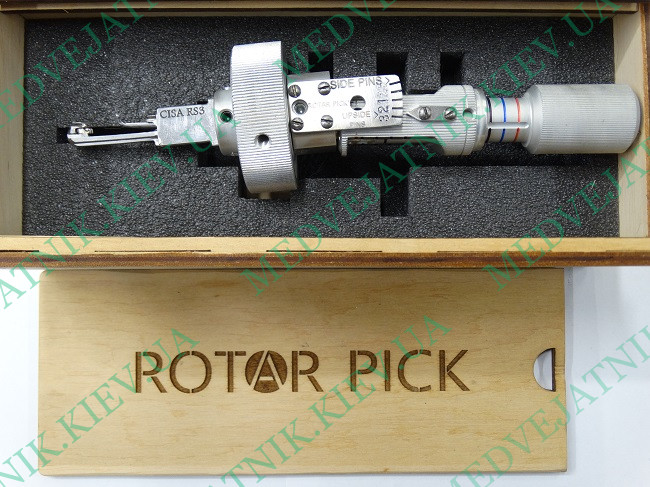
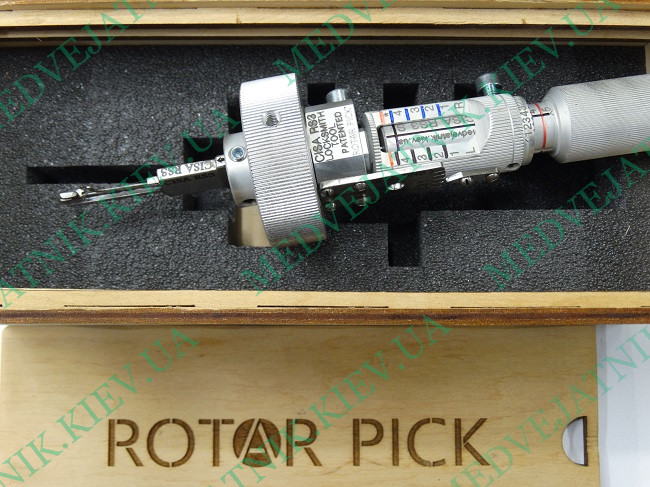
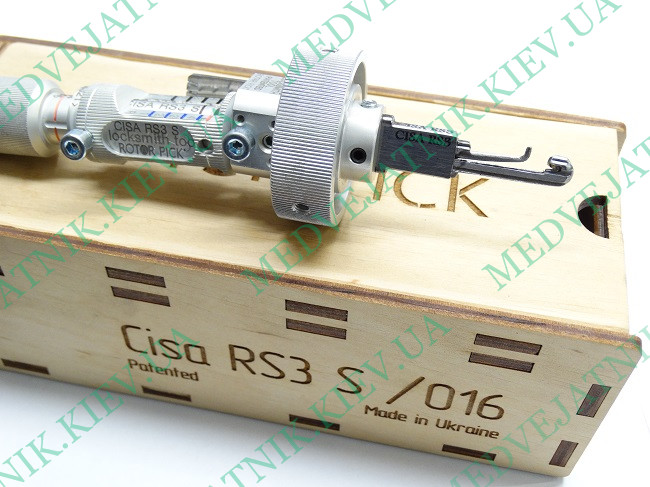


CISA RS3 Rotorpick decoder
Text in the 1st video: Cisa RS3 decoder. Works both for Cisa RS3, which doesn't have a profile here, and for Cisa RS3, which has a profile here in the middle. This key can enter both of these locks. How do we open this lock? Always lift the handle up in this way. This gives us the ability to get past the pins and gives us good picking up. Also, there is a special tongue, it helps us to manipulate, it is an interactive element, it helps us to pull out. When we pull it out, we simply adjust the handle in this direction, and pull it out slowly. In this way, the top of the pins opens. Now let's try. Always insert until the end, tightly. Do not forget that the tool is delicate, so you need to use it lightly. So, we pick up the side pins, the left and right row. By clicks. Do not rush to press the handle, lightly. Now the top pins. Side ones again. Lower heights. Here are the lower heights. The strength of the direction is given very very light, like a feather. And we go down. The most difficult thing will be if, for example, we open to the left side first, it will be more difficult to lower the left side. The right side will be easier. The same will happen if on the contrary, we start from the right side. We are not in a hurry. Now the top row. It is also possible with such movements, but do not press hard. Be sure to look at the key when studying, what kind of encoding is there, then it will be easier to understand how the tool and the lock behave. Correcting the lowest heights. And probably somewhere else at the top. We can lower the handle a little more to make it easier for us to push through low heights. Check out the top row. The lock is opened.
Text in the 2nd video: Hello! This is Cisa RS3. We insert the tool tightly and always hold it so that it goes towards the lock. The tension force is small. We go by divisions, by clicks. Top pins. Also, we correct the tongue ourselves with the manipulator. I draw your attention to the lowest heights, the tension should be very light, very. And make sure that the tool does not come out of the lock. Top pins. You don't need to press hard. Do not hurry. Also, help pull out the tool with the tongue so that it does not get stuck.
Text in the 3rd video: I am showing you Cisa RS3. Two different profiles. Almost all the heights are low here. The upper one is the most important aspect. All the heights are here, but some have recesses. But they will also need to be raised. I am showing you the difference. This one goes here and here. This one goes only here, but it will not go here. Before you start working. There is a flag at the bottom. This is a must. The first thing you do is when you insert the tool, move it a little left and right along the red line and then set the side pins. These are the side pins. These are the side pins. ………….This is how the tool will need to be raised. Always. This is how it will need to be raised. And the upper ones are set according to the four. You can also move it like this. And lower it down. But very carefully. And do not apply any tension. You just need to hold the tool handle from below. That's it. Let's try. It opens well to the left and to the right too, but you just need to pay more attention to the upper pins. This is how we start. The tension force is average.. Maybe even less. And we work by clicks. Do not press the tool. The manipulator is made of good metal, but nevertheless. By clicks, we set. The tool has moved a little, towards the opening. We put it along the line. You can see, right? Along the line on the four. And we just hold the tool. We carefully lower the handle down. Do not press hard. You can do it even more by combing. With such movements and smoothly down. We rearrange. This screw is for shooting off, if the pins are over-pressed. This happens, of course. And we release. The main thing is not to rush. Always learn by the key. Watch how the tool and the lock behave. The tool is specific. We always correct low heights. Low ones are those where there is practically nothing. Because anti-picking pins are not so easy. The tension force is almost minimal. Everything by clicks. The tool does not get stuck. We try the other way. We try this option, we try to the right. It will take a little time. Don't forget to hold it when pulling it out and help pull out the tool with the manipulator. Don't forget to look at the decoder. There are 4 side heights and 3 upper heights. So as not to lower it too much. This is also bad. The tool has shifted. Now we try to lower the upper one. Hold it. We don't apply any tension. The highest pins will also need to be lowered a little. We combed it. We sent it. An interactive element just in case ……. Don't forget this. We adjust the side ones and always look at the decoder. So as not to lower it lower. This is felt, which one will be needed. For example, pick up a pin, it snaps into place itself. And the one that should not be touched - it will stand. And another important thing. If to the right, then we start from the left side. If to the left, then from the right side. Vice versa, in general. You can also change the combination, but it will be more difficult. For example, you open the right one, you pick the left, then the upper one and then the right one. It's whatever is more convenient for you. I pick the side ones first, then the top ones. True, it's a little hard to push through because of the anti-picking pins. No force is needed. I line everything up. Try to follow the line. Here, between the three and the four, you can move like this. It clicks. This side is a little more difficult, but the results will be the same. Don't forget, when it's a side one, lift the handle up. Maybe you can't see how it happens in the video. Be sure to lift the handle. Don't rush if you've over-pressed it. Maybe I over-pressed it too. They shot it off. Here's a screw. I even screwed it in. I put it on like this. I don't recommend disassembling the tool. There's nothing interesting there. The settings are all very precise. So that you don't have any problems. And by the way, you can make a key using these scales. You'll also need to adjust the side ones. We won't touch the highest ones, but we're interested in the two, the three in height. This is where there are practically no holes. Well, not deep ones. It's very important to understand this. Because the manipulator itself does not have much rigidity. Somewhere we are already at the goal. That's how it works. Thank you for your attention!


