 All about product
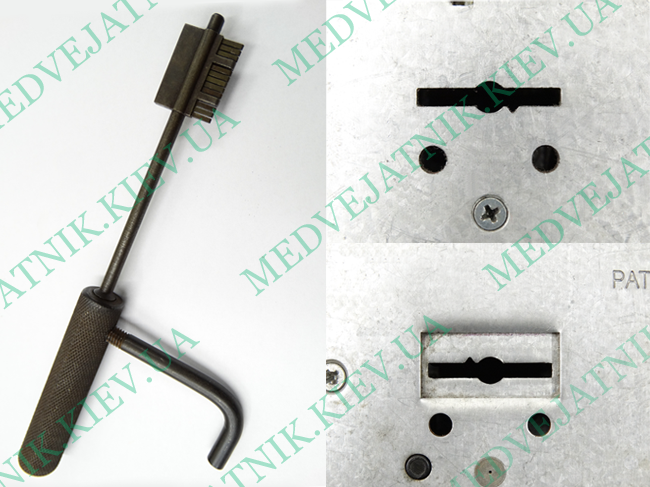
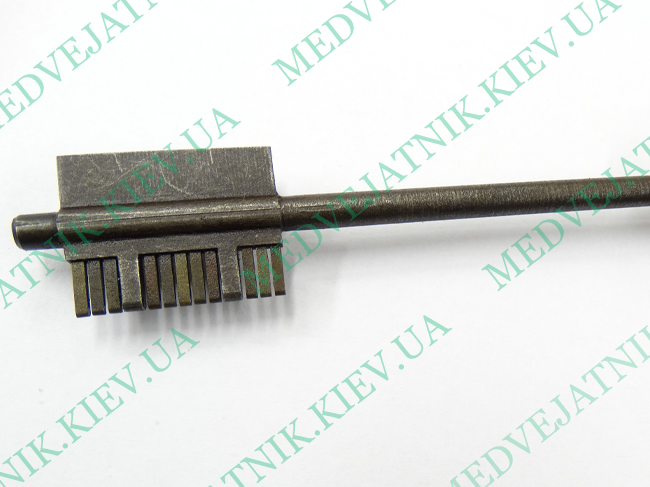
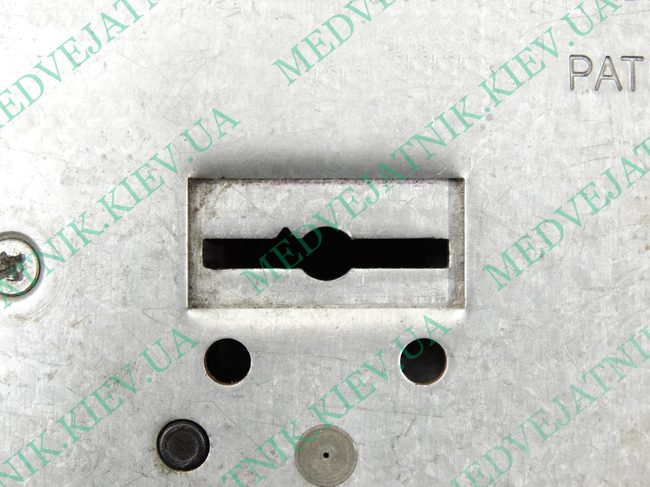
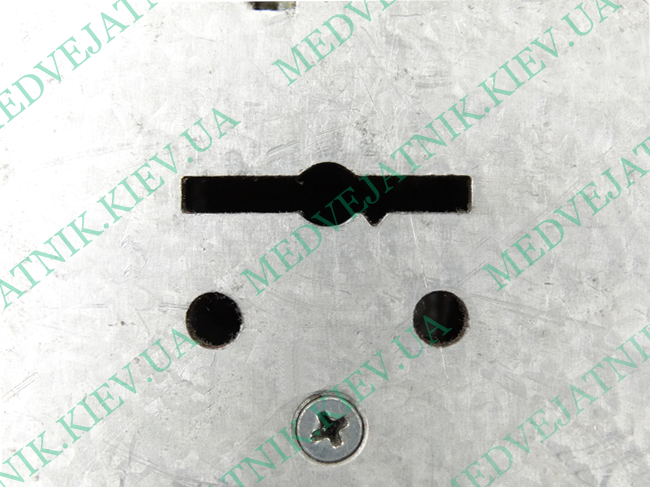
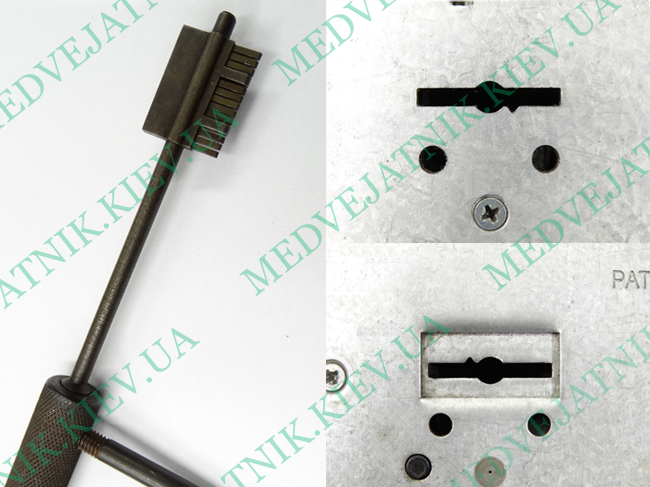
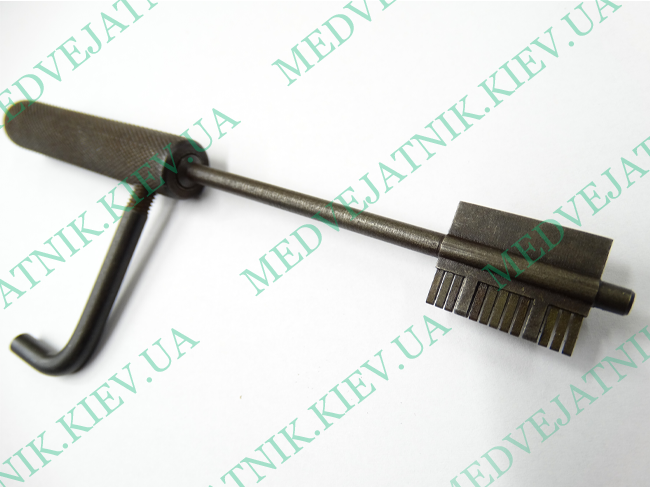


Self-impressioning lock pick for KALE/GARDA/CISA 3+5+3 - Magic key for CISA company locks.
Almost does not need adjustment. It is recommended to store the tool with pins put forward in the opposite direction - it is obligatory.
Before the work may need to drive pins into both sides 2-3 times.
In very rare cases, and only for certain locks may need dry lubrication, but again, in very rare cases, usually just enough to drive pins up.
/
Text in the 1st video: Cisa locks with a large key. I have these locks without a key, I'll just show you the blank. It's a wide key, but inside there's 3x3 , 6-lever 3x3. So, not the whole key works, just half. It depends on how the lock is set—one way or the other, or the far or near side.The keyhole. From this side, it looks like this. From this side, like this. The main problem with the first few presses of the impression is that it bends the tumblers. Or rather, not the tumblers, but the pins. Because there are a couple of tumblers that don't rise all the way. They have a limited lift. Sort of like this: it rises like this... One moment. Here, for example, it rose like this. If all the tumblers rise to their full height, then there are a couple of tumblers that don't rise all the way. And at this point, you apply tension, and the needle simply bends. This problem can be overcome. You just need to know how to do it. That is, the initial tension. Oh, by the way, the needles must be adjusted very well. They shouldn't be too stiff or too soft. This is a very important adjustment. To prevent the pin from bending as soon as you insert the tool, you need to make the very first press very light. And we try to apply light tension so that one or two tumblers drop. It's usually two, I think. So that two tumblers drop. And when it drops, you'll immediately see and feel that the impression has turned further. This will be visible by the handle. Here, mine have dropped. It wasn't visible on camera. It was like that, and then it dropped further. Noticeably. In this lock, that's the first and fourth pressure. Once they've dropped, you can apply a really good tension and a good up-and-down motion. Because the Cisa takes a long time to assemble. It doesn't open that quickly. You can hear it now. That's it, it won't bend the needles anymore. It's tight enough. And we pump. And it can take a couple of minutes to assemble like that. It takes a long time to assemble. But it does. It`s okay You can pull it out, to look at the key, to see that the pattern assembles, which means everything's fine. Because someone might think something's wrong. In fact, it can take a very long time to assemble. Slowly. And that's even with perfectly adjusted needles. Well, here is, there's a turn. It's better to open Cisa with two Magic keys, with two tools, because with just one it will take a very long time. Now I'll show you what happens when you apply too much tension right away. The needles simply bend. You might not even notice, but the needle is bent. Once it's bent, it becomes so stiff that it can no longer perform its function any further. You might not notice, but it will be bent. Here, I pressed it twice. You can see how one has already started to bend. We'll do more now. Well, the fourth one is bent. The first one doesn't seem to be bent, but maybe slightly. It will be difficult to straighten it while standing in the door. Therefore, if it's bent, it's no longer working when bent. We take out the non-operating needle from the other side. Since the near side is working now. Or vice versa, if the far side is used, then we take it out from the near side. The lock inside is 3x3. So, 3 and 3 work. And 6 doesn't. So, you have 6 spare needles that you can pull out and use as a spare. Look, I'm inserting the fourth one now. And since it's bent, it needs to be lowered immediately. Well, about 2 millimeters. That's approximately 2 millimeters. So, if it's bent, we insert a new one and lower it by about 2 millimeters. Give or take. This one you can test for stiffness. Does it work properly or not? Well, it works properly. So, you don't need to change it; it just keeps working. And if, say, on the first turn, it's first and fourth, then on all the other turns, that is, on the second, it will also be first and fourth. So, when I open the first turn, I already know that on the second, I can immediately lower first and fourth. So, this will already be known from the first turn. I'm showing this now to illustrate how to work. And after that, we apply good tension and move it up and down. It seems like it's taking a long time, it seems like something is already going wrong, but everything is going just fine, just slowly. Obviously, making the pins a little softer will speed things up a bit. But it's best not to overdo it with this softness; it's better to set them a bit firmer, which will make them more stable. Again, the first press. Insert it, apply a slight tension, and then try to wiggle it with a slight tension, so that the pair of pins where the tumblers don't rise very high sink. After we felt that the impression had sagged, we checked it to see if it was bent or not, and then we work at full force, with good, even strong tension, and pump it up and down. If it's bent, then you removed the bent pin, pulled it out, inserted the new one, and immediately lowered it by 2 mm. Accordingly, if the first and fourth are here (I mean those low tumblers) then the next few turns will also be first and fourth. That is, on the second turn, right off the bat, you can take and lower the first and fourth, or, for example, the second and fourth. Basically, whichever one falls out. Well, nothing out of the ordinary, but it's important to know because many people don't. Regarding the settings. It needs to be really well-set. The pins should move smoothly. Not too hard, not too soft. That's the Cisa. Basically, if you know all these things, 90% of these Cisa locks open without a problem.
Text in the 2nd video: These are three locks. The locks are the same, but the names are different: Garda, Kale, Cisa. The sizes are the same for all. The impression fits all these locks. The pins need to be lined up like this, a little higher than the tightness. Since the levers on the key rise a little higher here, too, some. Well, about 1 mm. Cisa lock. It is very important with Cisa, the first tension should be done very gradually, little by little. If you push right away, the pins may bend. Therefore, at first we do it smoothly, and when the first pins have already lowered, then we can continue to work at full strength. This is Kale, a replica of Cisa lock. In general, Cisa, Garda, Kale - the same magic key/lock pick is suitable for them.
Text in the 3rd video: Hello! Now we have a review of the tool for the Cisa lock with a wide key 3-5-3. The key is an assembly key, the lock is new, the keys are new, I haven't even unpacked the keys yet. So, the Cisa lock with 4 turns.


