All about product
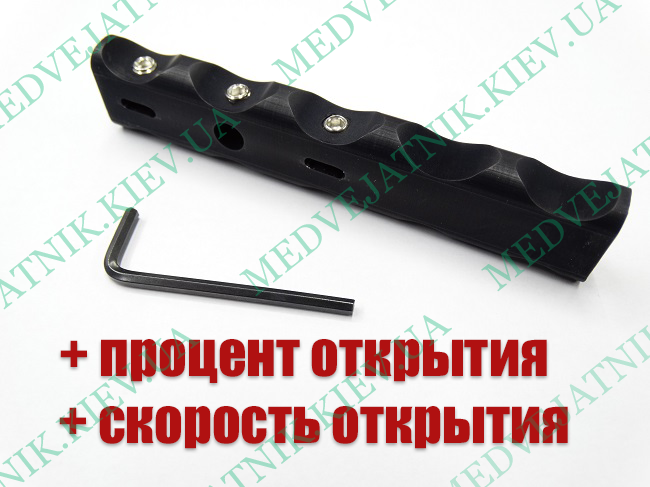
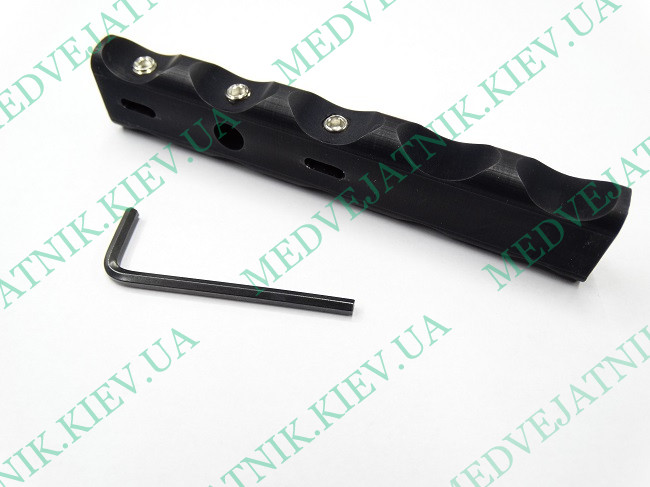
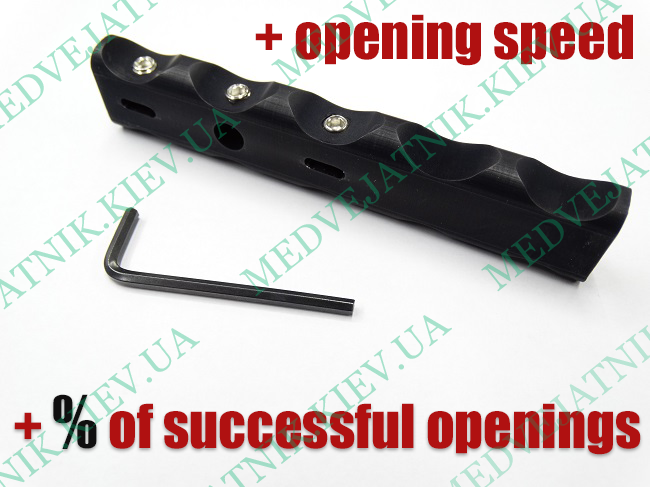
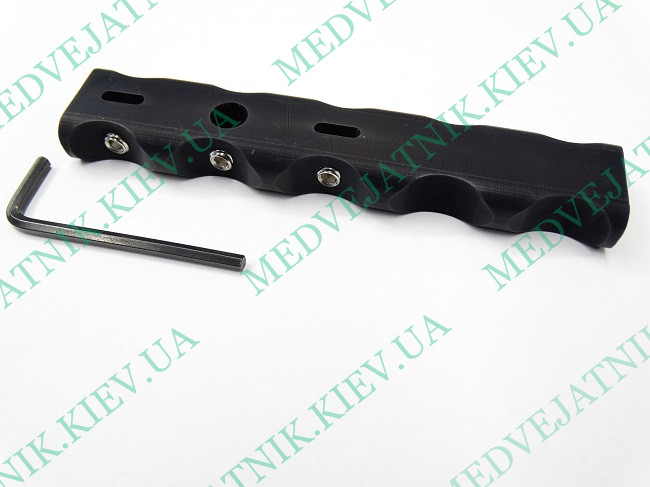
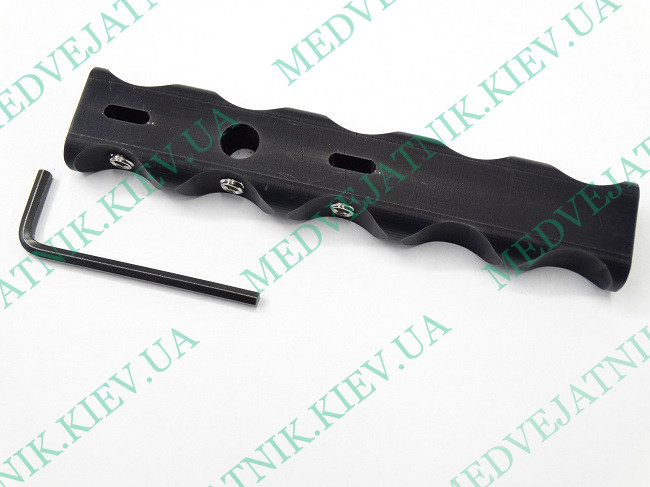


Special lockpicking handle significantly encreases percentage of successful locks openings
Universal handle for impression picks.
Allows you to increase the percentage of opening locks. Increases opening speed.
It also allows you to deploy or rip out a jammed tool in the lock.
Text in the 1st video:
Hello. This is a great handle that we came up with to simplify and speed up opening. This is a handle for opening locks.
Here is a list of problems that we encounter in the process of opening cylinders with a foil tool.
First. This is speed. Some cylinders, of course, open in 20 seconds. And some have to open for 2-4 minutes. Making such movements and making tangible efforts. It is very hard, you can sweat a lot in the process.
Second. Wedging / jamming. That is, when, for example, it turned, you tore it off the spot, it turned / spun and stuck half a turn. It won't let me take out the tool. This sometimes happens with different door locks.
Third. Scrolls in one direction only. For example, we tore it off the spot, it spins to the right, but does not want to spin to the left. Or vice versa.
Fourth. Opening percentage. There are locks that open almost one hundred percent, closer to one hundred percent. But there are locks that open in 70 percent of cases and, accordingly, in 30 percent they do not open. There are locks that open in 80 percent. Why is this happening at all? Why don't they open? I will try to explain.
Here are the pins. For example, 5 pins. Here we have inserted a tool with foil and begin to swing. One pin will be in its position in 15 seconds, the second pin will be in its position in 12 seconds, the third pin may be in 5 seconds, the fourth pin may be in 10 seconds. And one remaining pin can ... (there are also mushroom-shaped pins, that is, anti-picking traps) and it may take 1 minute.
So, while we are swinging the tool for a minute, any other pin that has already become in its position before, for example, this one, which has become in its position in 5 seconds, can, under the force of pressure from vibrations and springs, be crushed and the foil will wrinkle there. And yet, the lock did not open. This is roughly how I explain the process. That is, the more time these movements occur, the more likely it is that the lock will not open.
Another option.
Interactive pin on the key. It is not on the master key. Here the situation is about the same. We insert the instrument. We have the drawing on the key gathered correctly. Absolutely all the pins have become in their positions, but since this interactive pin is not here, it holds, it restrains and does not allow the tool to be rotated. And we, accordingly, also start, 10-20 times, a minute - a minute and a half swing, because this interactive pin holds. And while this time passes, one of the pins, maybe even several pins, is simply pressed under the force of the spring and that's it, the lock does not open. That is, to pass this interactive pin, you need a sharp effort, sharp and intense. I'll show you now, approximately. This is Tesa TX80. It opens very often using the standard handle that I now have in my hands. It takes a little effort, a little tug, to go through this interactive pin and the lock opens. But this is not always, that is, it does not give 100 percent. Now let's try. Well, it stuck. It is clear that it takes a long time to open, right? And sometimes it may not open at all. It is because of the fact that there is an interactive element. And now we will try to open using our new special handle. The handle was created specifically for this purpose - it increases the percentage of successful openings, it makes it possible to move a jammed lock, it makes it possible to deploy a lock that only rotates in one direction, and it makes it possible not to make large and exhausting efforts when opening. You will make much less effort using this handle.
Position number 2 for these impressions.
This is position number 1, that is, we stagger like this.
Position number 2 is like this.
Here you can fix. But this is not required.
Now let's just compare the speed of work. Insert like this. We hold on a little.
Well, and in this way.
Here. Well, I didn't use a stopwatch. But you can rewind the video to check how long the first picking took and how long this picking took.
Here. It doesn't turn to the left. It takes a little push to get it off the spot. With this handle, it is easy to do this, the right effort is created. Up, down, right, left.
When we work with such a handle, our hands get tired and some begin to press in this way, not left and right, but up and down, just breaking. With this method, the tool can break very quickly.
TESA TX80 - it was such an average version.
Here I take STS two-row. If you work with it using a regular handle, you will suffer for at least 3 minutes, at least! That is, to open the STS, such a handle is simply necessary.
Further. KALE two-row. Whoever uses not quite the right foil with it, thin, for example 05, although 06-07 is required, he runs the risk of getting a jammed lock on a half-turn of the key. Very big chances. After that, moving it from its place is a problem.
Same thing with AGB. Here I have AGB, 4 cylinders. If you work with a standard handle, you can open 3 of the four. One of them didn't open for me. If you work with this handle, then such a constant tension is created ... I will show you again now. It is clear that the lever is much larger. That is, your hands are relaxed, you do not need to strain. Same thing in this position especially.
And when a regular handle can rattle like that, it just dangles and the spring sometimes randomly crumples the foil. And here you get a constant tension, that is, sharp and clear movements. In general, it turns out very effectively.
Here are all the problems that I wrote:
Speed - speed increases
A jammed lock can be torn off from the spot. I'm not saying 100%, but you increase the ability to budge and turn a jammed tool.
The same applies to turning, when it turns only in one direction. Getting off the ground will be much easier with this handle.
Well, and accordingly, the percentage of opening, where it was 70% - will be at least 80%! That is, it may not give 100% opening, but the percentage of opening will definitely increase!
And now I'll tell you how to work wrong.
Of course, you must feel the load. Because it's not a force key to take the handle and just rotate it with force. This is such a correct, uniform effort. And of course, you should have a quality instrument, not a Chinese one. And the profile of the tool should be thick enough. If you have a thin profile ... well, there are such, for example, Abus, Cisa, you take it in your hands and understand that it is thin, naturally, you can’t give a load with such a tool. But, for the most part, for all of our foil impression tools, this handle can be used. It will make the job very easy.
And the last moment, this is, as it were, an additional moment for which the handle was not created, but this hole can be used for lever impression picks. Maybe someone will come in handy. And thus it is a universal handle.
... Just a minute, I didn’t tighten it.
I think it's clear, right? It can be used with lever impression picks, but in general the handle was made to work with an impression tool for cylindrical locks. It makes work very easy, it increases speed, and so on. I think I explained clearly. The price of the tool is on the website, the link is under this video.